
April 20, 2026
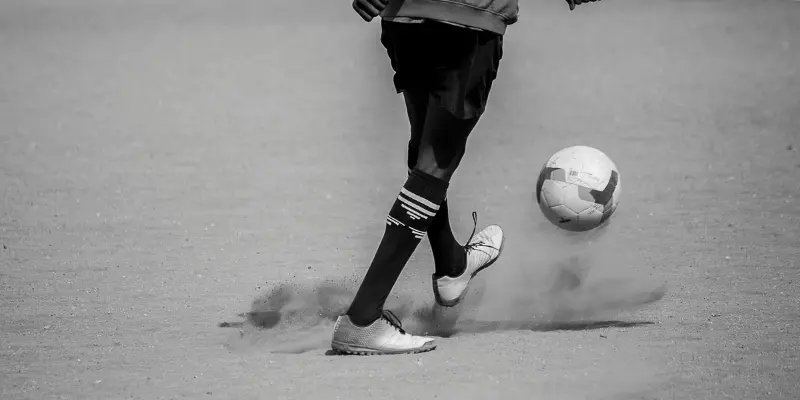
The field is one surface, but it’s never the same surface twice. The morning preparation holds for one game; each one after it inherits a different ground.
That sequence is where dust conditions originate, not in any single game or the preparation that preceded it.
A full day of shared use leaves something on the surface that no single game can put there alone. The dust that rises later traces back to that accumulation, sport by sport, from the first game to the last.
The shared field as operational reality
What changes from one game to the next is not always visible in the layout of the field, but it shows up in how the surface responds to its use. Those responses reflect how activity is arranged across the day, not any single moment of use.
Those changes do not happen in a single moment. They build across use. Areas that see repeated contact begin to demonstrate first, often in ways that are easy to miss until movement passes through them again. Material that stayed in place earlier becomes easier to disturb as the surface is worked over time. What appears stable at the start of the day gradually becomes more variable as activity continues.
On most shared fields, that shift happens without a full reset. Use is layered rather than separated. One game gives way to the next, sometimes with only a short interval in between. Maintenance, when it happens, is typically applied ahead of the first event or aligned with a primary use, not between each period of play. Once activity begins, the surface carries forward whatever condition it has been left in.
That carryover is uneven. Some areas are worked repeatedly, while others are brought into play later under a different type of movement. A section that held together earlier may begin to loosen after additional use, while another that saw little activity at first starts to change more quickly once it is used differently. Fine material that helped hold the surface together becomes easier to lift as that sequence continues.
By the time another sport steps onto the field, it is not starting from a neutral surface. It is working on material that has already been compacted, broken, or shifted in specific places. Dust that appears later is linked to both the earlier sequence and the current situation.
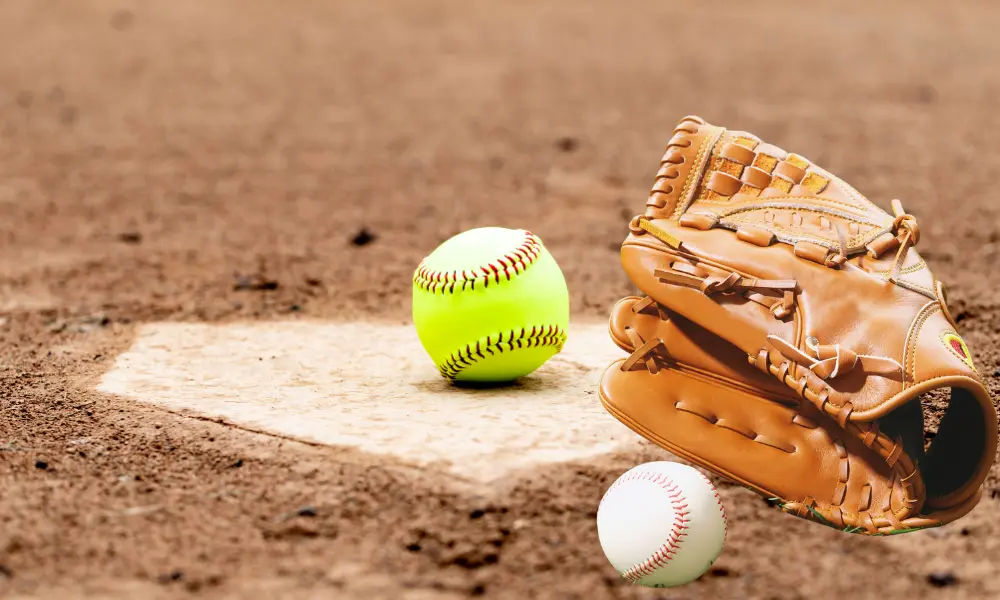
Baseball and softball: the surface it was built for
A baseball or softball infield is one of the few surfaces in a shared field that is shaped with a specific use in mind. The dirt skin is not just soil left in place. It is a mix, usually some balance of clay, silt, and sand, sometimes with added material like calcined clay, intended to hold together under play while still allowing water to move through it. When that balance is right, and if moisture content is there, the surface stays firm enough for footing and predictable enough for ball movement without breaking apart easily.
This condition does not persist independently. It depends on how the surface is used and where that use is concentrated. Baseball does not distribute movement evenly. Most of the field remains relatively undisturbed, while a few areas absorb repeated contact over the course of a game.
The batter’s box changes first. The same stance and pivot motion are repeated dozens of times, working the top layer loose. At the bases, especially along the base paths, players accelerate, stop, and slide into the same spots inning after inning. The pitcher’s mound sees a similar pattern, with repeated push-off and landing in a confined area. These are not occasional disturbances. They are concentrated, consistent, and layered on top of each other.
As that repeated contact builds, the surface begins to separate. The finer portion of the mix, the small particles that help bind the surface together, works upward and becomes easier to displace. What held together earlier in the day starts to break down in those zones. Even with dragging between games, that loose material is often spread rather than fully reset, especially when time is limited.
The result is uneven. Parts of the infield still play as expected, while others begin to soften and lift under movement. When players slide or change direction in those worn areas, the surface releases small amounts of material more readily. In dry conditions, that release becomes visible as dust. Even when it is not visible, it is still present at ground level, where most of the contact occurs.
The surface is no longer the same by the time a second game starts. The most heavily used areas have already moved past their initial balance.
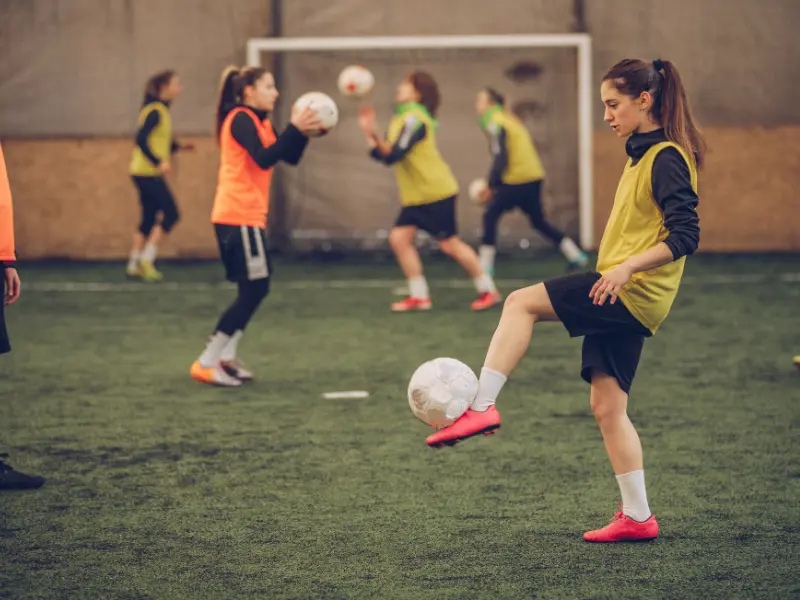
Soccer: distributed load, different damage
By the time soccer uses the infield, the surface no longer behaves as a contained playing area. The same ground that held movement in specific zones earlier in the day is now opened up to continuous use across its full width. There are no fixed points where activity concentrates. Every part of the skin is in play.
Movement changes the surface differently. Players do not return to the same spot repeatedly. They cross the field in long runs, stop abruptly, turn, and accelerate again. Each step applies force at a slightly different angle. The top layer is not struck in one direction or in one place. It is worked from multiple directions, often in quick succession.
Cleats contribute to that change. Instead of driving into the surface and pivoting in place, they tend to scrape and pull across it as players cut and turn. On a surface that has already been disturbed, that motion lifts material more easily than it would on a freshly prepared infield. What was compacted earlier begins to loosen across a much broader area.
The effect builds quietly. There are fewer obvious points where the surface fails all at once. Instead, the top layer begins to move more freely underfoot across the field. Small amounts of material lift with each change in direction. Some of it settles quickly. Some of it stays suspended just above the surface as play continues.
What emerges is not a series of visible bursts but a consistent presence. The surface does not hold together in the same way, and it does not release material in the same way either. It responds continuously, shaped by movement that never returns to a single point long enough for the ground to settle back into place.
Flag football, lacrosse, and overlapping use patterns
As the range of activities on a field expands, the surface is no longer shaped by a single type of movement. Different patterns begin to overlap, often within the same part of the field and within the same stretch of time. What was once concentrated or evenly distributed becomes mixed.
Some of that change comes from how play shifts across the field. In flag football, movement tends to compress toward certain areas, especially near scoring zones, where repeated cuts, stops, and contact with the ground occur in a confined space. Those areas do not necessarily match the zones that were worked earlier in the day. A section that remained relatively intact during baseball or was only lightly affected during soccer can begin to wear quickly under a different pattern of use.
At the same time, there is more direct contact with the surface. Players fall, dive, and slide without the same controlled motion seen in a prepared infield. That kind of contact disturbs the surface differently. It presses into it in some places and loosens it in others, often within the same sequence of play. Youth lacrosse adds another variation, with players moving in longer paths across the field and then clustering near the goal area, applying repeated stress to zones that may not have been part of any earlier maintenance focus.
These patterns do not replace one another. They accumulate. Areas that were already beginning to shift earlier in the day are worked again under a different kind of movement. Other areas that had seen little use are brought into play more aggressively. The surface becomes less consistent from one section to the next, not because of a single event, but because multiple types of use are layered without a pause for recovery.
By the time several activities have taken place, the field carries a mix of conditions that do not align with any one sport. Some sections hold together, others begin to move underfoot, and the transition between them becomes less predictable. Material that might have remained settled under a single pattern of use is more easily disturbed when those patterns overlap, and what lifts from the surface reflects that combined effect rather than any one game in isolation.
The maintenance gap that shared scheduling creates
The way most fields are maintained assumes that the surface has time to settle between uses. That assumption holds when activity is spaced out. It becomes harder to sustain when one game follows another with little interruption. The surface continues forward in the condition it was left in, while the tools used to manage it are still applied as if there were a pause.
Watering is the most common way to hold a surface together. For short-term use, when applied at the right moment, it helps the top layer stay compact and reduces how easily the material lifts under movement. Its effect, though, is tied to timing. It works best when applied shortly before use, when moisture is still present near the surface. But watering alone is not an efficient method of dust control. On a field with continuous play, that window does not always line up with when the next sport begins. What was added earlier in the day may no longer be present in the same way by the time the surface is used again.
Dragging and grooming operate on a similar assumption. They are intended to level the surface, redistribute material, and prepare it for play. When used ahead of a single event, they can restore consistency across the infield. In a shared schedule, they are often applied once, usually before the first game, and not again before the next use. The surface that follows is not freshly prepared. It is the result of that initial preparation combined with everything that has happened since.
Time becomes the limiting factor. Between games, there may be only a short interval, sometimes just enough to clear the field and reset equipment. That interval rarely supports a full maintenance pass, especially when the same area is being prepared for a different type of movement. The surface carries forward its previous condition not because it was left unattended, but because there was no practical opportunity to return it to a consistent state.
Under these conditions, the response of the surface becomes less tied to any single action taken before play. It reflects the sequence of use more than the most recent maintenance step. Moisture, surface leveling, and material distribution all change over the course of the day, while the approach used to manage them remains fixed. The gap between how the field is used and how it is maintained is what shapes the result.
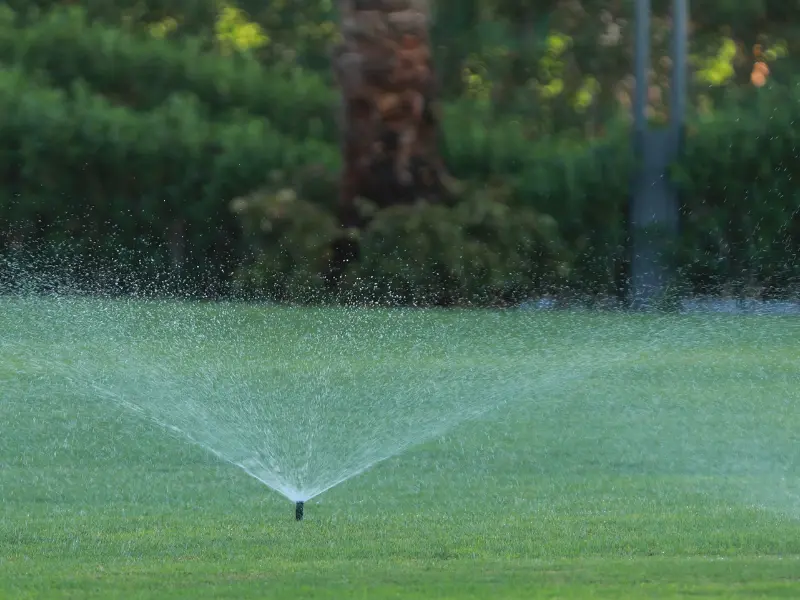
What a surface treatment approach looks like on a shared field
The conditions created by continuous, mixed use point toward a different way of thinking about the surface. When dust appears repeatedly under changing patterns of movement, the question is less about when to apply moisture and more about how the material holds together under stress.
At the surface level, much of the behavior described earlier comes back to how smaller particles move. When those particles are free to shift, the top layer becomes easier to disturb, whether the force is concentrated in one area or spread across the field. Changing that response does not require altering how the field is used. It requires changing how those particles interact with each other.
Surface-binding treatments approach the problem at that level. Instead of relying on added moisture to hold material in place temporarily, they work by increasing cohesion within the top layer of the surface. When that cohesion is present, the same movements that previously loosened material are less likely to separate it as easily. The surface still responds to use, but it does so with more resistance to displacement.
Polymer-based treatments are one example of this approach. Applied to the surface and worked into the existing material, they form a bond between particles that remains in place beyond a single use. That bond does not eliminate the effects of play. Areas that see more contact will still change over time. What shifts is how quickly the surface moves from a stable condition to one where material begins to lift.
For a field that supports multiple sports in sequence, that change in behavior carries through the day. The surface does not rely on a narrow timing window to maintain its condition. As different patterns of movement act on it, the response remains more consistent because the underlying structure has been reinforced. The same areas may still experience more stress than others, but they do not separate as readily under that stress.
How the response plays out depends on what the field is made of and how it is used. The proportion of clay, silt, and sand influences how a treatment interacts with the surface. The depth of the working layer and the level of compaction also affect the outcome. A field that hosts occasional games behaves differently from one that sees continuous use across multiple sports in a single day.
In that context, a surface treatment is not applied to match a single event. It is applied to match the way the field is actually used over time. The goal is not to prepare the surface for one game but to influence how it responds across many.
Reading the field as it changes
By late in the day, the field does not carry a single condition. It holds a mix of responses that reflect how it has been used, where movement has concentrated, and how often the surface has been worked without a pause.
Some areas remain firm enough to play as expected. Others begin to shift under the same movement. The difference between them is not always visible until contact passes through those sections again. What lifts from the surface, and where it does, follows how the field has been used across the day.
It continues forward from where it was left, and each use leaves something behind that the next one works through.
Applications - Dust Control & Soil Stabilization Products
Leave a Reply