
June 5, 2026
On an active haul road, the change does not usually appear all at once. Visibility tightens first. Not dramatically, just enough to be noticed. Dust remains suspended longer than expected. It begins drifting beyond the immediate work zone. Operators tend to notice this early. Instruments may not. By then, the surface condition has already shifted.
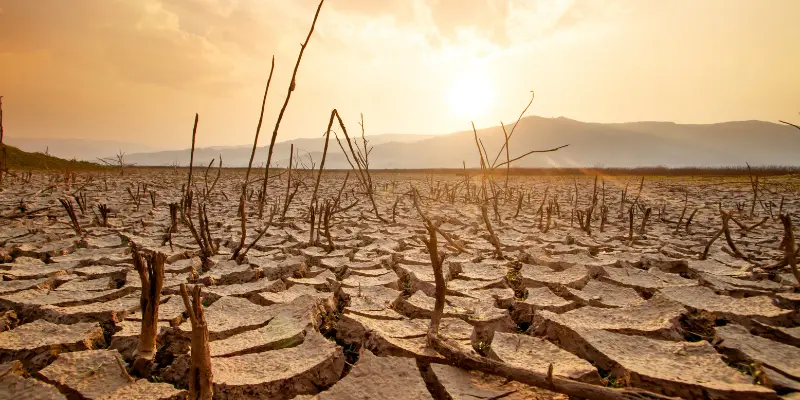
The underlying change starts earlier. Moisture declines gradually. Structure weakens over time. The surface does not immediately reflect it. When loose material begins to lift, the system has already moved into a different state.
El Niño extends this process. It does not introduce a new mechanism. Dry periods last longer. In some regions, it is significantly longer. Methods that work over short intervals begin to lose reliability when those intervals stretch.
What El Niño Does to Soil
El Niño develops when trade winds weaken across the Pacific. Warm surface water moves eastward. Rainfall patterns change. These events typically occur every two to seven years, though timing and intensity vary. The event itself usually lasts about a year, but its impact on soil systems persists far longer.
Some regions receive more precipitation. Others do not. Parts of India, Indonesia, and Australia often experience extended dry conditions during stronger events. The response within the soil profile is gradual. Moisture declines first at the surface. Then below it. This progression is not always obvious early on, and the difference between surface appearance and subsurface condition is often missed in early assessment.
Field observations show that water storage can drop across an entire growing season, not just briefly. Similar behavior has been documented in work by Mansoor et al., where extended dry periods were shown to reduce moisture across the full soil profile rather than only at the surface. Field research across Argentina’s agricultural regions has shown that multi-week dry sequences can drain soil water storage across entire growing cycles (Penalba et al., 2018).
As moisture decreases, several forces change. Water films between clay particles thin and eventually disappear. Capillary forces weaken, and electrostatic attraction reduces as well. Organic binding material dries and loses flexibility. The structure does not collapse suddenly; it loosens instead. Fine fractions begin to respond to smaller disturbances, and wind that previously had little effect can now move the surface layer.
Adding water back does not restore the original condition quickly. The internal arrangement has already shifted, and particles do not return to earlier positions on their own. Losses increase. Semi-arid regions may lose around 10 tonnes per hectare per year during an El Niño drought, and data from the Godavari basin shows a measurable link between drought and erosion. Crop yields decline, sometimes significantly.
Economic effects follow. The 1997 to 1998 El Niño event resulted in global GDP losses estimated at $5.7 trillion, and earlier events show similar outcomes. Projections for future strong events under continued emissions estimate additional global losses of up to $33 trillion through the end of the century. The IPCC also projects increasing variability in precipitation linked to ENSO as global temperatures rise.
Many operations attribute this deterioration to traffic or wind without linking it to preceding rainfall events that initiate the process. Stronger events have become more frequent — not uniformly, but enough to be noted.
How Fugitive Dust Forms and Why It Spikes During El Niño
Dust formation is not simply about the presence of loose material. It depends on how strongly that material is held together. Once cohesion drops below a certain level, movement begins, and it does not require much force.
Traffic contributes. On untreated haul roads, a loaded truck can release several kilograms of PM10 per vehicle-kilometer, and repeated passes increase output. Wind plays a role as well, often a larger one than expected.
Movement usually begins with larger grains. They lift slightly, travel short distances, and strike the ground. Each impact produces smaller fragments, and with each cycle the proportion of finer material increases, which changes how the system responds to both wind and traffic. Over time, the size distribution changes. That matters.
Larger particles settle quickly and remain near the source. Finer material behaves differently: it stays suspended and moves with air currents. PM2.5 fractions remain airborne longer and travel further, and when inhaled, they reach deeper parts of the lungs. Transport is not confined to the site; fine material can move beyond operational boundaries, sometimes considerably.
Rainfall during dry periods does not always stabilize the system. A short rain event wets the surface, and as temperatures rise, moisture moves upward from deeper layers. Dissolved salts move with that moisture.
Evaporation follows. Salts crystallize, pressure develops between particles, and aggregates begin to break down. This process does not happen all at once; it develops over repeated cycles, and not all of it is visible immediately.
The Impact of Fugitive Dust on Equipment, Workers, and Operations
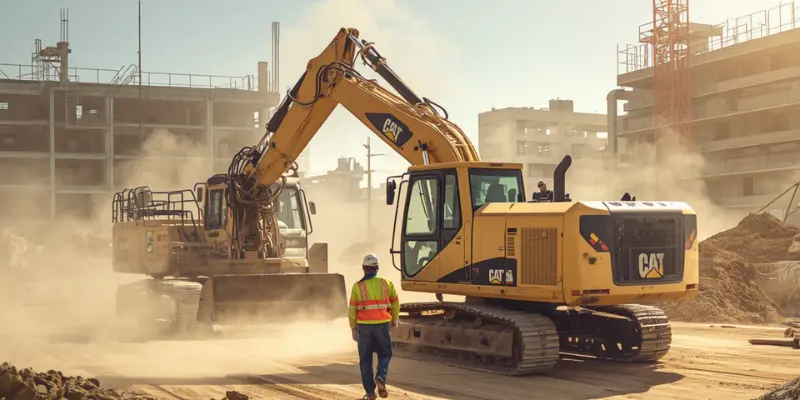
The impact shows up in multiple ways. Inside equipment, crystalline silica introduces a mechanical issue. Its Mohs hardness is about 7, while most steel engine components fall between 4 and 6. That difference matters.
Once particles enter engine systems, they act as abrasives. Wear develops gradually, affecting cylinder walls, piston rings, and valves. Even at lower concentrations, sustained exposure leads to cumulative degradation over time. Efficiency declines, not always immediately. Maintenance intervals shorten, and fuel consumption increases.
For workers, the concern is different. Fine material remains suspended and is inhaled during normal operations. PM2.5 particles reach deep lung tissue, settle in alveolar regions, and cause fibrotic damage that develops over time and does not reverse. Long-term exposure leads to damage.
In regions such as Peru, Ecuador, Indonesia, and the Philippines, where mining and agriculture operate together, both are affected during drought. Crop yields decline, and equipment performance also degrades. These effects tend to occur at the same time.
Tailings facilities can become a source once surface water evaporates. Fine material remains exposed, and moderate wind is often sufficient to lift it. The remaining material typically consists of fine silt with particle sizes ranging from 2 to 50 micrometers.
Construction work is affected when particulate levels exceed limits. Operations may stop, equipment idles, scheduled work such as concrete pours is delayed, and contract penalties begin to accumulate.
Unpaved roads change as well. Fine binding material is gradually lost, and the remaining surface does not hold together as effectively.
Why Conventional Methods Fall Short in Prolonged Dry Spells
Most dust control methods depend on environmental conditions. During extended dry periods, those conditions become unreliable.
Water application provides short-term suppression. Under high temperature and low humidity, evaporation occurs quickly, and water applied to a surface may disappear within hours. Maintaining coverage requires repeated application, which increases water demand. A single haul road may require tens of thousands of liters per day. Over longer periods, this becomes difficult to sustain, and water availability is also constrained during drought.
Reducing vehicle speed lowers the dust generated by traffic, but it does not address wind-driven emissions. Chloride treatments depend on the moisture in the air; in low-humidity conditions, they cannot retain sufficient moisture. When wet conditions return, they can move into the surrounding soil and groundwater, increasing salinity and creating long-term soil chemistry issues.
Biological methods improve soil over time, but germination typically requires soil moisture around 50 percent of field capacity. During an El Niño drought, this can drop 25 percent below for extended periods, preventing establishment.
How Acrylic Polymer-Based Dust Control Works
Polymer treatments approach the problem differently. They act within the soil rather than only at the surface. After application, the material moves into the pore spaces, bonds form between particles, and these bonds create a network.
Covalent bonds remain stable under both wet and dry conditions. Systems based on weaker interactions behave differently, because moisture disrupts those interactions. Under repeated wetting and drying cycles, the difference becomes more apparent: weaker systems degrade, while polymer networks tend to hold their structure.
Depth matters. Surface applications affect only a thin layer, while deeper penetration stabilizes the zone where movement begins. Polymer materials also resist degradation from sunlight.
At higher application rates, treated surfaces may reduce water infiltration, and the surface can become hydrophobic, causing rainfall to run off rather than penetrate. Reapplication frequency changes, and cost patterns change with it.
Polymer treatments are applied using standard spray equipment, and application rates depend on soil type. Independent geotechnical testing of our products has shown California Bearing Ratio improvements of 400 to 500 percent in treated soils. The treatment remains effective in saline conditions up to approximately 4 percent salt concentration, comparable to seawater.
Preparation steps may be required, though not always. Field results show lower airborne particulate levels on treated surfaces compared to untreated areas.
Different formulations are used depending on the application. Lower concentration treatments target active haul roads, while higher concentration variants are used for slopes, embankments, and tailings, and military-grade formulations are designed for extremely high load conditions. Application is typically carried out using standard spray equipment such as water truck spray bars or agricultural sprayers, and soil preparation may include scarification, followed by compaction to improve penetration and bonding.
Equipment performance improves. Timing affects results as well, and treatment applied before dry conditions develop tends to perform differently.
Final Thoughts
El Niño increases the duration and intensity of dry conditions. Soil stability declines, and dust generation follows. Methods that depend on environmental conditions become less reliable. Stabilizing the soil structure reduces particle movement at the source.
Applications - Dust Control & Soil Stabilization Products

Leave a Reply