
November 24, 2025
Dry months often expose a familiar problem: a path that looks clean and natural in spring begins kicking up dust with every step, leaving a thin film on nearby plants, equipment, and anything downwind.
Many people try to manage this with quick fixes, only to watch the surface darken, turn patchy, or lose the natural texture they wanted to preserve. This creates a tension between controlling dust and keeping the path looking the way it should.
This guide breaks down how to reduce dust on unpaved cart paths in a way that maintains their natural tone and feel. By the end, you’ll understand the main treatment options, how each behaves on the surface, and the steps to help protect appearance over time.
Why Unpaved Cart Paths Produce Dust, and Why Many Treatments Change the Look
Unpaved paths made of decomposed granite or similar aggregate rely on a mixture of particle sizes to stay firm. The smallest particles, often called fines, help lock the surface together. When these fines loosen due to dry weather, foot or vehicle traffic, or wind, the top layer breaks apart, forming dust. As federal guidance on fugitive dust notes, managing loose aggregate surfaces often benefits from site-specific planning and periodic inspection to limit dust movement.
This natural breakdown is often addressed with watering or quick dust suppressants, but many of those solutions come with side effects. Water evaporates quickly on exposed surfaces and provides only temporary suppression; without repeat applications, it rarely produces durable cohesion. Salt-based suppressants can deepen the color or leave a slight sheen. Film-forming coatings can create a sealed, artificial appearance that stands out from the rest of the landscape.
For people who want the surface to stay natural, dusty, glossy, or darkened patches can feel like a bigger problem than dust alone. That’s why choosing a treatment that blends with the existing material is so important.
Natural-Appearance Stabilizers & Binders: How They Work and When They’re Appropriate
Several treatment families can reduce dust while maintaining a natural look, each with its own behavior on the surface. The key is understanding how they interact with fines, moisture, and the existing base layer.
Polymer Solutions
These treatments form a flexible link between particles once they cure. When applied in appropriate amounts and spread evenly, many polymer emulsions provide cohesion with minimal change to surface appearance; inappropriate application can alter tone or sheen. They suit areas that have steady traffic or repeated load cycles, since the cured film tends to stay integrated beneath the surface. Acrylic polymer solutions, such as those produced by EP&A Envirotac, Inc., are designed to bind soil particles and improve surface cohesion without forming a noticeable surface film when applied in appropriate amounts.
Plant-Based Binders
Often used where environmental sensitivity is a concern, these binders help fines grip the surrounding aggregate. They blend well with natural materials and usually leave the surface with its original tone. They work best when the surface has enough fines to anchor the binder properly.

Resin or Wax Blends
Resin or wax blends are formulated to provide cohesion while avoiding a fully rigid shell when applied correctly; formulation and application determine final firmness. They may slightly enrich the natural tone of the material but generally maintain a matte finish. They are useful when a subtle, natural appearance is important, but a bit more cohesion is needed than plant-based options can provide.
Chloride Treatments (Appearance Caution)
Chlorides hold moisture and often cut dust quickly, but they can deepen the surface color or leave a mild sheen. They can also raise corrosion concerns for nearby metal components. They are best used in areas where appearance is less critical.
Table 1: General Appearance and Use-Case Traits of Stabilizer Types
| Stabilizer Type | Typical Appearance Result | General Use-Case Fit |
| Polymer emulsions | Matte, natural finish | Moderate–heavy traffic areas |
| Plant-based binders | Minimal color change | Natural-look surfaces, sensitive areas |
| Resin/wax blends | Slight tone enhancement possible | Areas needing stronger cohesion |
| Chloride treatments | May darken or add a mild sheen | Utility areas where appearance is secondary |
Key Performance Factors for Dust Reduction Without Altering Appearance
To maintain a natural look, it helps to understand the conditions that influence any treatment’s behavior:
Surface cohesion
A path with enough fines and a stable base holds treatments more evenly. If the surface is too loose, any treatment may look patchy.
Moisture interaction
Some binders work best when the path holds a small amount of moisture during application. A surface that dries too quickly may cure unevenly.
Drainage and slope
Areas with poor drainage may develop soft spots or early washouts. Treatments may appear uneven where water pools or flows.
Weather exposure
Sun exposure, shade, and temperature swings all affect how the binder ages. Some binders remain flexible; others become brittle if overexposed.
Traffic type and pattern
Turning zones, slope entries, and narrow sections wear faster. These areas may need touch-ups sooner than flat, straight stretches.
Permeability
Treatments that maintain permeability preserve natural infiltration and help prevent surface sealing. This supports natural vegetation and avoids puddling.
How to Apply Natural-Finish Stabilizers Without Changing the Look
Application has as much influence on appearance as the choice of treatment itself. An even, moderate approach usually produces the most natural results.
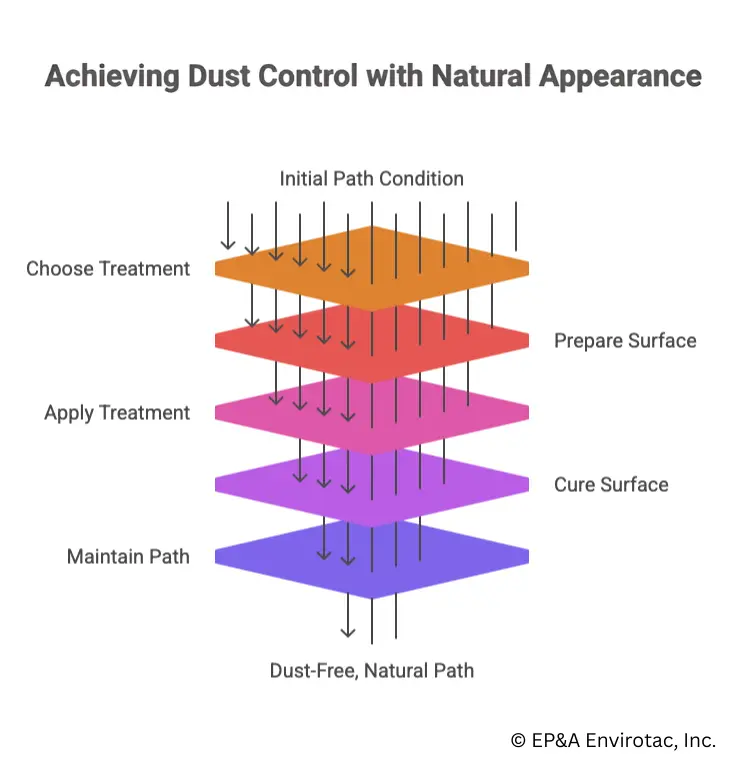
1. Prepare the Base
Smooth out ruts, dips, or scattered gravel.
Ensure the surface is firm underfoot.
Add a small amount of matching fines only if the top layer is thin.
2. Check Moisture Conditions
If the surface is extremely dry, it may absorb the treatment unevenly. Light surface moisture, just enough to help create uniform acceptance, can help prevent streaking or dark patches.
3. Apply Even, Moderate Coverage
Heavy application often leads to a darker tone or slight surface shine. Using controlled, consistent passes helps maintain the natural look of the material. Slight overlaps prevent visible striping.
4. Allow the Surface to Cure
Keep traffic off the path until it firms up. Disturbing the surface too early can create uneven patches or dull spots that stand out later.
Maintaining a Natural Look Over Time
A natural-finish path doesn’t need constant attention, but small checks help maintain appearance and surface strength.
Look for areas that loosen after repeated use, especially near turns.
After a strong storm, inspect for early signs of washout.
Lightly groom the top layer if it starts to ravel.
Add small amounts of fines only when the surface looks granular or thin.
Reapply treatment based on surface condition, not a fixed schedule.
A brief example:
A trail section with moderate traffic remained stable for multiple seasons with occasional grooming along the edges and a light recoat in a few areas where the top layer thinned near an incline. These targeted touch-ups kept the surface uniform without changing the overall appearance.
Environmental & Safety Considerations (Appearance-Sensitive Context)
Choosing a treatment goes beyond appearance and dust control. Several environmental and safety factors matter as well:
Vegetation and soil interaction: Natural-finish treatments often allow water to move through the surface, supporting nearby plants.
Runoff: Some treatments hold up better in areas where water flows along the path.
Corrosion: Chloride treatments may not be ideal near metal fixtures or equipment.
Wildlife and pets: Non-chloride options are commonly chosen in areas where animals are present.
Documentation: Always review the product Safety Data Sheet (SDS) for handling, application, and cleanup guidance, as recommended in federal hazard-communication standards.
These considerations help ensure performance without unintended side effects.
Simple Decision Guide for Selecting a Natural-Finish Dust Solution
A few condition-based cues can help narrow the choices:
If the surface must stay matte and natural in tone, consider plant-based or light polymer-based treatments.
If the path sees steady or mixed traffic, polymers usually offer stronger cohesion without a noticeable surface film.
If the area borders sensitive vegetation, low-impact binders may suit the site better.
If darkening or surface shine is a concern, avoid treatments that tend to form films or rely heavily on moisture retention salts.
If the path sits in a wet zone, choose binders known for stable behavior in damp environments.
Field guidance on choosing cart path materials explains how loose aggregates migrate and why maintenance planning matters for appearance and function.
Table 2: General Condition-Based Guidance
| Condition | Treatment Family to Consider |
| High aesthetic expectations | Plant-based binders or light polymers |
| Steady or mixed traffic | Polymer emulsions |
| Sensitive vegetation nearby | Non-chloride, natural-blend binders |
| Concern about surface darkening | Avoid chloride-heavy or film-forming types |
| Wet or shaded areas | Treatments known for stable curing in damp zones |
Frequently Asked Questions
Will stabilizers make the surface shiny?
Most natural-finish treatments stay matte when applied moderately. Overapplication is the usual cause of sheen.
Can these treatments change the color of the path?
Some treatments can deepen tones if applied heavily. Light, even coverage helps keep the original look.
Do stabilizers affect drainage?
Many natural-finish options allow water to pass through. Surface sealing usually occurs when too much product is used.
Can I treat an older or previously untreated decomposed granite path?Yes. The path may need light grading and fresh fines to ensure even binding.
What upkeep should I expect?
Periodic checks after rain or heavy use help maintain appearance. Reapply only when the surface shows clear signs of loosening.
Summary: Dust-Free, Natural-Looking Paths Are Achievable
Dust control and natural appearance can coexist with the right approach. A good result comes from choosing a binder that suits the material, preparing the surface carefully, applying it evenly, and responding to changes in the path over time. Small adjustments and condition-based maintenance help protect both performance and appearance.
If you’re reviewing ways to keep a natural-looking path stable through dry seasons and regular use, you can explore the dust-control polymers and soil stabilizers offered by EP&A Envirotac, Inc. These treatments are intended to achieve firmer surfaces without altering the finish of the material. Use the points in this guide to decide whether they align with the conditions on your site.
With the right combination of material awareness and steady maintenance, a natural surface can remain both functional and true to its intended look for years to come.
Applications - Dust Control & Soil Stabilization Products

Leave a Reply